As pressure on water resources grows, recirculating aquaculture systems (RAS) offer an opportunity to produce fish while reducing water use and improving resource efficiency. However, expanding these systems requires advances in water treatment, nutrient recovery, monitoring, and economically viable technologies.
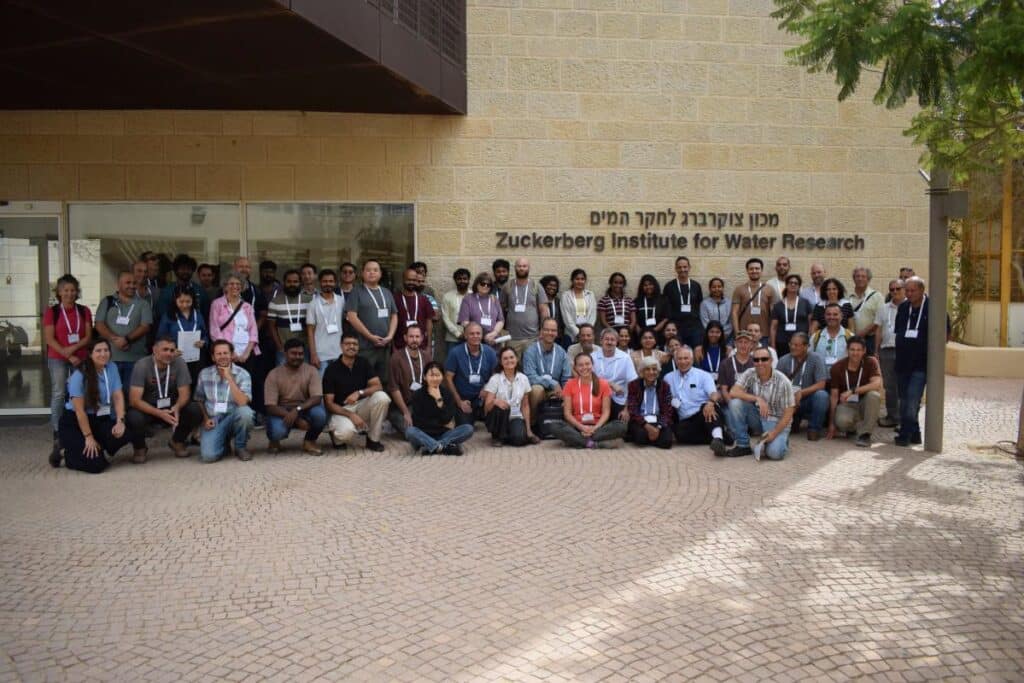
These challenges were at the center of a BARD-supported workshop, “Advancing Water Treatment in Recirculating Aquaculture through Innovative Materials and Membrane Technologies” held October 11–14, 2026, at Ben-Gurion University of the Negev in Sde Boker, Israel. Organized by Ben-Gurion University of the Negev and the University of Arkansas, the workshop brought together researchers and stakeholders working across aquaculture, membrane technologies, functional materials, electrochemistry, water-quality monitoring, and resource recovery.
The scientific program examined how technologies developed in different disciplines could address some of the practical challenges facing RAS. Topics included membrane-based water treatment, electrochemical treatment, ammonia removal and recovery, membrane fouling, multi-trophic aquaculture, microalgae-integrated RAS, and the recovery of nitrogen and phosphorus from aquaponic systems. Researchers also presented approaches using advanced functional materials and sensing technologies for real-time water-quality monitoring and fouling prediction.
Three key opportunities emerged from the discussions: integrating smart sensors and real-time monitoring into RAS operations, improving nutrient recovery and reuse, particularly nitrogen and phosphorus, and strengthening connections between academic research and industry needs. Moving these technologies toward commercial implementation remains a challenge. Participants identified research funding, scale-up, energy requirements, integration with existing RAS infrastructure, biofouling, and operational reliability among the barriers that need to be addressed.
The workshop highlighted the potential of combining expertise across disciplines to improve the efficiency and sustainability of recirculating aquaculture. It also provided a foundation for future collaborations and potential pilot-scale demonstrations aimed at translating research advances into practical applications.
Priority areas for further research include affordable continuous-monitoring sensors and pilot-scale validation of membrane, electrochemical, and advanced-material technologies under realistic operating conditions. Beyond presentations and discussions, participants toured aquaculture facilities and visited fish farms and research and renewable-energy facilities in the Ramat Negev region.